What’s in bloom
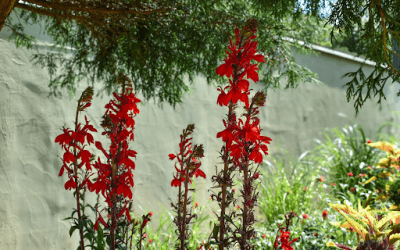
What’s In Bloom: July 2025
Lobelia cardinalis, commonly known as Cardinal Flower, is a native herbaceous perennial found throughout much of eastern and southern North America, extending from Mexico down into Colombia. It naturally thrives in wet environments such as creek overflows, riverbanks, bogs, and swamps.
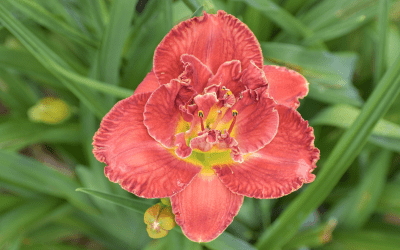
What’s In Bloom: June 2025
Daylilies, often called “ditch lilies,” are clump-forming, upright herbaceous perennials with foliage reaching 1 to 1.5 feet tall. Native to Asia and central Europe, they are not true lilies. The genus name comes from the Greek words hemera (day) and kallos (beauty), a nod to the fact that each bloom lasts only a single day.
What’s In Bloom: May 2025
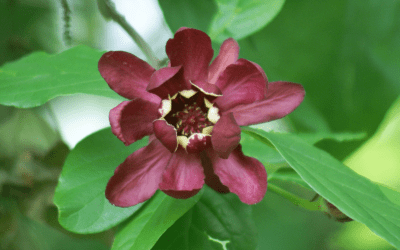
I couldn’t resist highlighting the Aphrodite Sweetshrub – a plant that brings back fond childhood memories. I remember visiting a neighbor’s old home and smelling the sweet scent of Carolina Sweetbush, a shrub once common in yards across the Deep South and native to that region.
What’s In Bloom: April 2025
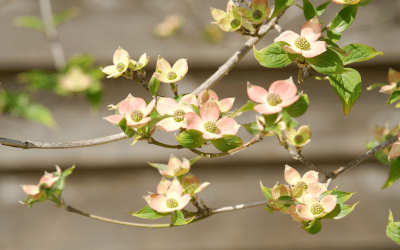
The Stellar Pink Dogwood is a hybrid of the American Dogwood (Cornus florida) and Chinese Dogwood (Cornus kousa), developed by Elwin R. Orton Jr. at Rutgers University. Though modest in size, this upright deciduous tree with gracefully layered branches makes a beautiful accent for front yards and small garden spaces.
What’s In Bloom: March 2025
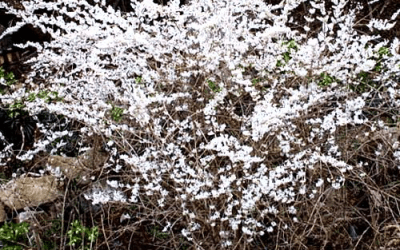
When I hear the common name “Forsythia,” I often picture a medium-sized shrub covered in bright yellow, bell-shaped flowers. The “White Forsythia” has similar small, white bell-shaped blooms, though I must admit, it’s not as showy as its more popular cousin.
What’s In Bloom: February 2025
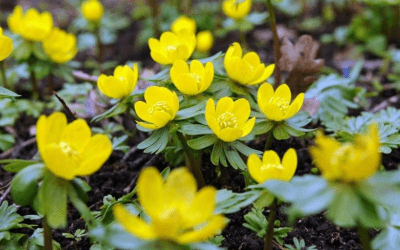
A true sign of spring, winter aconites typically begin blooming in Ozark gardens by mid-winter, emerging after a brief warm spell and hinting at the season ahead. This low-maintenance, tuberous perennial belongs to the buttercup family (Ranunculaceae), with flowers resembling its close relatives.